Emergency Fire Damage Guide: What To Do Before Help Arrives
A fire changes everything in an instant. It’s overwhelming—smoke still hanging in the air, the sound of fire engines fading, your mind racing with what to do next. You’re not alone. Every year, thousands of property owners face this exact moment. At RHA Fire, we know the hours after emergency fire_damage are confusing and critical. That’s why our certified crews work 24/7, helping both families and businesses reclaim their lives, one step at a time.
This guide is your roadmap for those first tense hours. Simple, clear actions. Real peace of mind. Here’s what matters most before help arrives.
Assessing Immediate Safety 🚨
Safety isn’t just the first step—it’s the only step until you know it’s okay. Fires leave behind hazards you can’t see or smell. Think of your property like a stormy sea—hidden dangers just below the surface.
Wait for official clearance:
Never enter a fire-damaged building until fire officials, police, or building inspectors confirm it’s safe.
- Structural instability can cause sudden collapse.
- Lingering heat might restart hidden flames.
- Air can be thick with toxins.
If you must approach:
- Wear sturdy shoes and protective gear.
- Bring a flashlight, not candles or open flames.
- Move slowly—damaged floors or ceilings can give way.
According to the National Fire Protection Association (NFPA), always follow the directions of first responders. If you smell gas, hear hissing, or see electrical wires, stay far away and alert the fire department immediately.
Securing Your Property
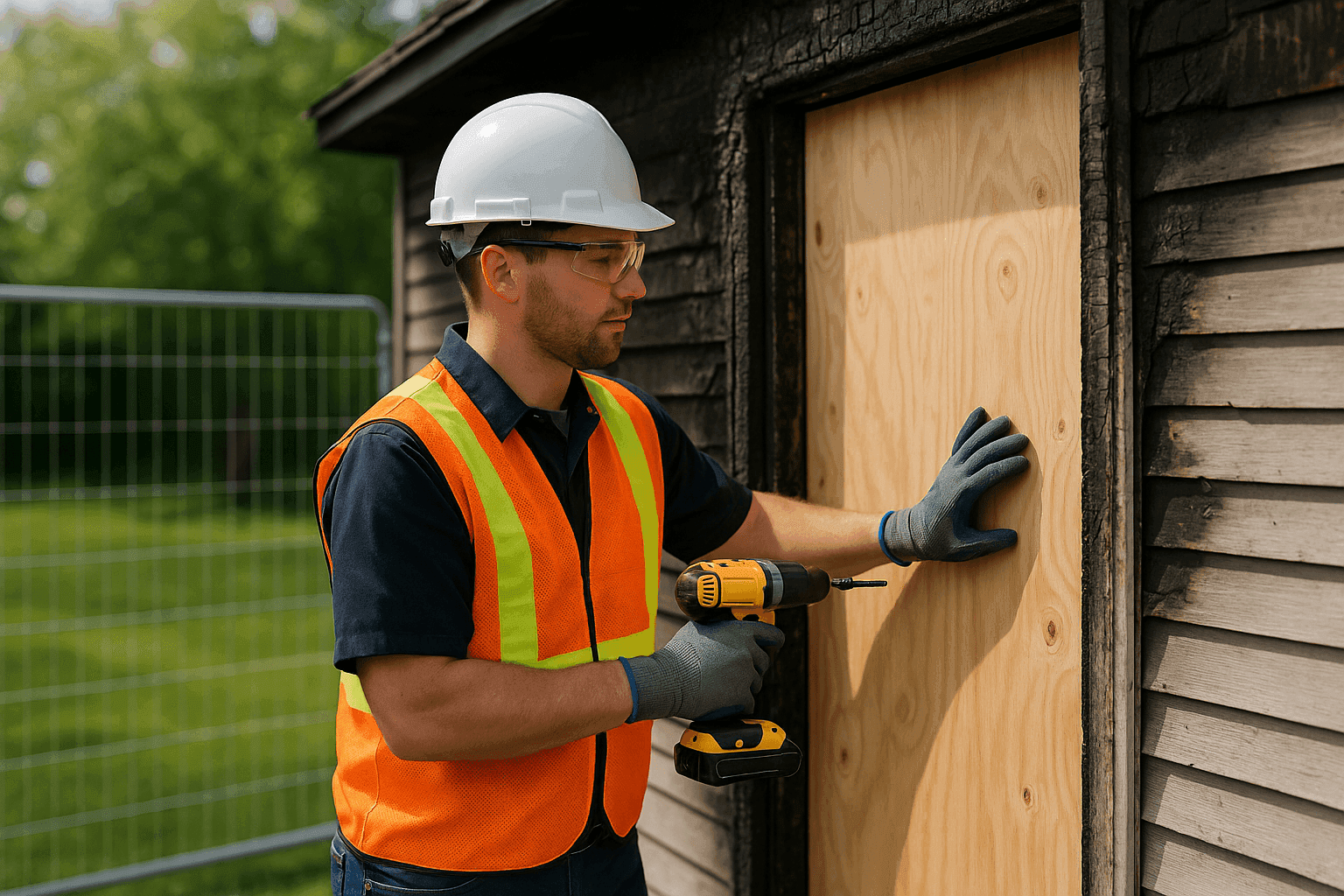
Once authorities say it’s safe, your next move is to protect what’s left. Like boarding up the windows before a hurricane, this step prevents looting and weather from making things worse.
Emergency board-up:
- Cover broken windows, doors, or holes in the structure.
- Use plywood or heavy plastic sheeting—never improvise with flammable materials.
Temporary fencing:
- Keeps unauthorized people out.
- Alerts passersby to hazards.
Shut off utilities:
- Only if instructed by professionals.
- Never touch electrical panels or gas lines yourself.
Why it matters:
The hours after a fire are when secondary damage strikes—rain can flood the interior, vandals can enter, and animals may nest inside. Secure the property as a top priority. RHA Fire’s team is available 24/7 for rapid board-up and Temporary Power near you, so you never face this alone.
Protecting Valuables and Important Documents 🗂️
Some things just can’t be replaced. If it’s safe and you’re allowed inside:
- Retrieve wallets, purses, IDs, and keys.
- Gather insurance policies, legal documents, and irreplaceable photos.
- Remove prescription medications and medical devices.
Document everything:
- Take photos or videos of all visible damage before moving or cleaning anything.
- Write down serial numbers for electronics and appliances.
- Keep a running list of lost or damaged items for insurance.
Tip:
Water from firefighting can ruin paper fast. Place wet documents in plastic bags or airtight containers as a temporary measure.
What Not to Do After a Fire
There’s temptation to jump in and fix things, but some actions cause more harm.
Never:
- Turn on lights or electrical appliances—wiring may be damaged.
- Start cleaning soot or debris on your own. Special equipment is needed to prevent further contamination.
- Attempt to repair structural elements or roof supports.
- Use household vacuums on fire debris—these can spread soot.
- Eat food or use cosmetics exposed to heat, smoke, or water.
Leave it to trained crews:
RHA Fire’s certified teams use advanced tools for water extraction, smoke and soot removal, and technical reconditioning. DIY fixes after emergency fire_damage can void insurance or make recovery harder.
When to Call Professionals
Some tasks can’t wait. The longer water, soot, or smoke lingers, the deeper the damage.
Call RHA Fire immediately for:
- Emergency board-up and Temporary Power near you.
- Water extraction and dehumidification to prevent mold.
- Structural stabilization if floors or walls are compromised.
- Remote monitoring for ongoing safety.
- Content cleaning and pack-out services for salvageable belongings.
Why act fast?
Mold can begin growing within 24–48 hours. Corrosion from soot starts almost immediately. Our crews are on call 24/7, trained in both residential and commercial fire_damage, and ready to work with your insurance provider for a smoother restoration process.
Quick Action Steps Checklist
- Wait for official clearance before entering.
- Secure the perimeter with board-up and fencing.
- Retrieve essential documents and valuables, if safe.
- Document all visible damage with photos and notes.
- Avoid all electrical or structural repairs yourself.
- Call RHA Fire for emergency fire_damage services.
What Not to Overlook
- Insurance documentation:
- Save receipts for hotel stays, meals, or emergency clothing.
- Maintain a log of all communications—names, dates, and what was discussed.
- Secondary damage risks:
- Water left behind can warp floors and create mold.
- Soot eats away at electronics and metal surfaces.
Frequently Asked Questions
How soon should I contact my insurance provider?
Immediately after you’re safe and have documentation of the damage. Most policies require prompt notification.
Is it safe to stay in a fire-damaged property?
Only if authorities have declared it safe, and only in unaffected areas. Smoke and soot particles can pose health risks.
What if I have pets?
Remove them from the property as soon as possible. Even minor smoke exposure is dangerous for animals.
Will I need temporary power?
If your electrical system is compromised, RHA Fire can install Temporary Power near you to run lights, security systems, or dehumidifiers.
Local and Seasonal Considerations 🌧️
Fires don’t pick seasons, but the weather shapes your recovery. In wet or stormy months, water extraction and board-up become urgent to prevent further flooding. In cold climates, freezing temperatures can worsen structural damage. RHA Fire’s crews are trained for year-round emergencies—ready whenever you need us.
Referencing the Pros
For more on fire safety, see guidelines from the National Fire Protection Association (NFPA) and recommendations by the American Red Cross. Their insights reinforce the steps above and highlight the importance of professional response.
When the unthinkable happens, you don’t have to face it alone. RHA Fire stands ready 24/7—with the experience, certified crews, and compassion needed to help you take back control, one step at a time.
Call RHA Fire now — or reach us anytime at 888-868-8083 .